
By: Ray King and Luke Matheson
The Jefferson County’s Quorum Court is under scrutiny for its use of “super sponsorship,” a new procedure that allows ordinances to bypass the traditional committee process and land directly on the court’s agenda—without discussion, review, or even awareness from many of the justices whose names are attached as sponsors.
Under the system, eight of the county’s 13 justices of the peace have given blanket approval for their names to be used on ordinances drafted by the County Clerk’s office. Only five signatures are required to qualify, but with eight justices giving prior consent, items can move forward without question.
The issue surfaced when County Judge Gerald Robinson noticed that an amended agenda contained several ordinances not included on the original agenda, which only listed items that had passed through committees. “Did any of the amendments go through committee? Was there a meeting that I wasn’t aware of?” Robinson asked in an email to Deputy Circuit Clerk Barbara Collins.
Collins responded that the Quorum Court passed a procedural ordinance on March 17, 2025, creating an exception for “super sponsorship.” In her words: “No meeting is required to obtain super sponsorship.”
Chief Deputy Clerk Tiffany Lowery confirmed to Deltaplex News that department heads submit requests on letterhead, the Clerk’s office drafts ordinances, and the eight justices have pre-approved their names to be added as sponsors as long as the requests originate from the Clerk’s office.
That means ordinances are being placed on the agenda without the sponsoring justices ever reviewing or debating them. Lowery further admitted: “There are no meetings being held to determine super sponsors.”
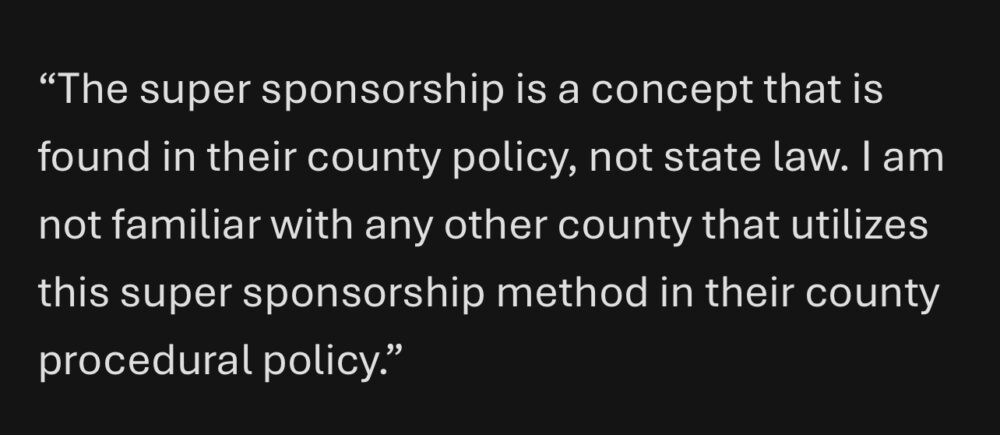
The Association of Arkansas Counties (AAC) has acknowledged that while the practice is not illegal, it is not grounded in state law either. “The super sponsorship is a concept that is found in their county policy, not state law,” said AAC Legal Counsel Lindsey Bailey French. “I am not familiar with any other county that utilizes this method.”
The potential pitfalls of the system became clear at Monday night’s Quorum Court meeting. Six items placed on the agenda via super sponsorship were later struck because they were already scheduled after passing through committee the previous week. The incident raises serious questions about whether justices even know what they are sponsoring when their names are attached to new ordinances.
Critics argue the process amounts to a dereliction of duty. By giving blanket approval, justices have effectively abandoned their responsibility to evaluate measures before attaching their names as sponsors. The committee process, which traditionally serves as a check for transparency and accountability, is being circumvented.
While supporters note that sponsorship does not equal a final vote of approval—since ordinances still require passage by the full court—the method nonetheless removes an essential layer of oversight.
At its core, the controversy strikes at a fundamental issue: if even quorum court members are not aware of what they are sponsoring until the agenda is amended, how can the public have confidence that their elected officials are acting responsibly?
For now, Jefferson County appears to be the only county in Arkansas employing this practice. Whether the “super sponsorship” survives legal or political challenge remains to be seen.
Notably, Deltaplex News reached out to several justices who have participated in super sponsorships for comment. All declined to go on record about the process.