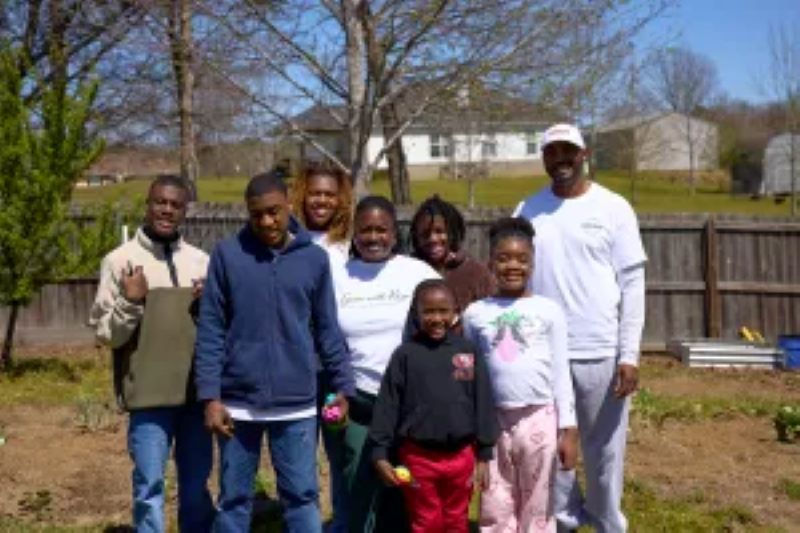
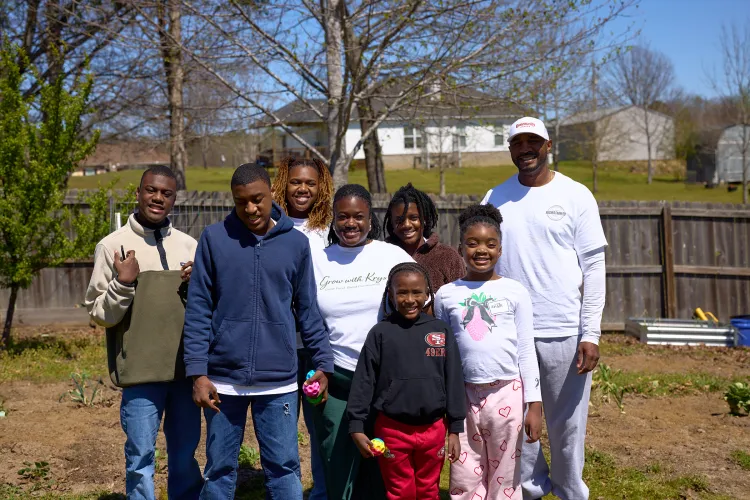
In 2020, Krystle Rucker decided she wanted to be intentional about the food her family ate. A wife, mother of a teenage daughter as well as triplets with special needs, she wanted to ensure her family was getting the nourishment they deserved.
“We live in Bauxite, Arkansas – the nearest grocery store is over 15 minutes away from our house,” she said. “Instead of driving to the store every time I ran out of onions or oregano, I thought it would be worth trying to grow it in my own backyard.”
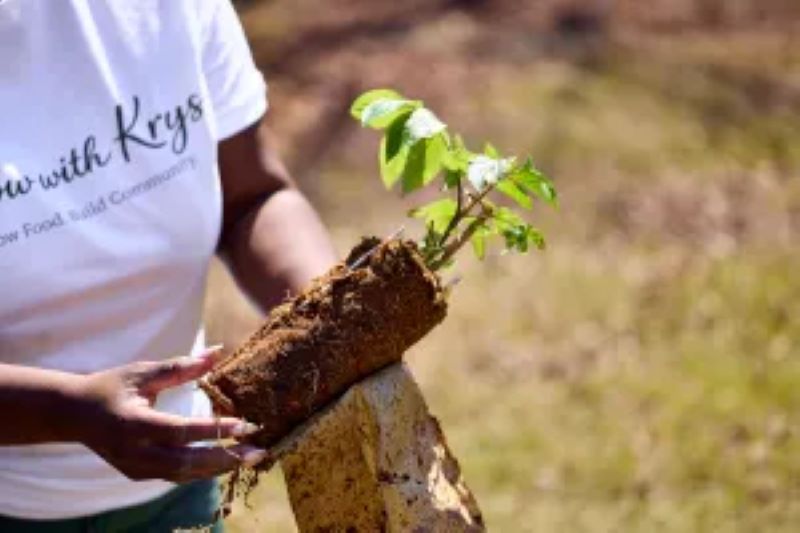
Rucker soon picked up gardening full-time. She was excited by the idea of producing her own food without the use of chemicals. At the same time, she took time to educate her children on the entire process of getting food to the table, showing them everything from sowing seeds and fertilizing the garden to harvesting vegetables, herbs and fruits.
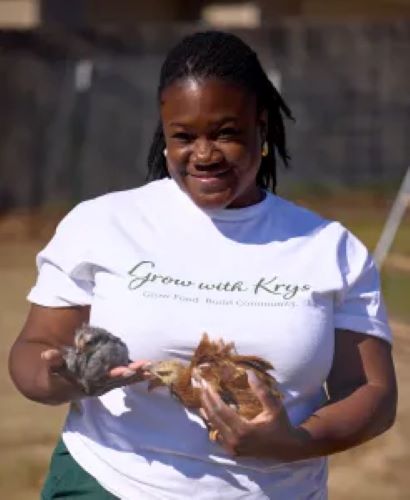
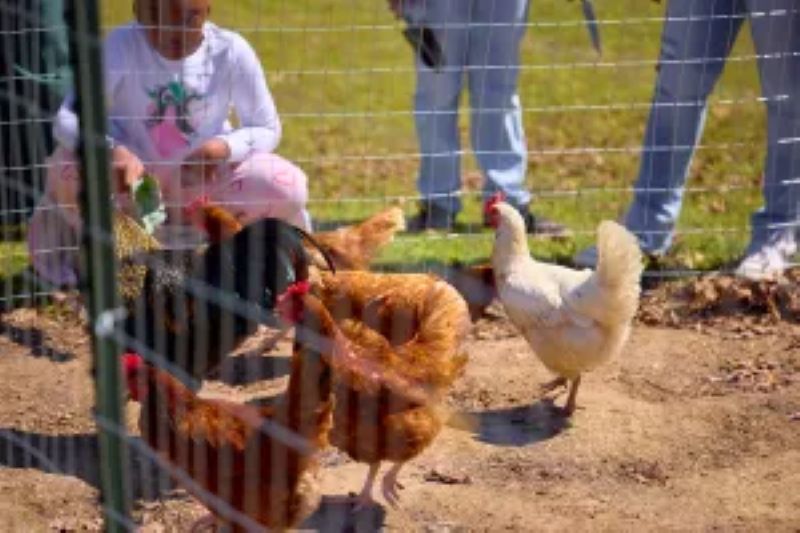
When neighbors started to express interest in Rucker’s project and the abundance coming from her garden, she began sharing her family’s gardening journey on TikTok and social media. Meanwhile her garden continued to grow in new and unexpected ways. For example, one day, Rucker decided she wanted to try keeping chickens.
“My husband Sam didn’t know anything about chickens, but he always goes along with my ideas,” she said. “I love researching and learning new things – so before we knew it, we not only had chickens, but also an overflow of eggs. People would come up asking if they could buy them.”
As demand for her eggs and produce grew, Rucker decided to take the next step. After researching the requirements, she formally established the family’s one-acre backyard operation as a farm.
Today, Rucker Farm Co includes a farm stand where the family sells produce and eggs to neighbors as well as followers of Rucker’s TikTok account “GrowWithKrys,” which has over 10,000 followers. More than just a farm business, Rucker Farm Co also hosts educational workshops on gardening, with a specific focus for youth and neurodiverse families.
Growing the Farm Through UAPB Programs
In early 2025, Rucker learned about the Beginning Farmer and Rancher Program offered through the University of Arkansas at Pine Bluff’s (UAPB) Small Farm Program. Aimed at individuals who have been farming for 10 years or less, the program focuses on business planning, production techniques, conservation strategies and marketing.
“I’m originally from Pine Bluff, Arkansas, so I have followed the UAPB School of Agriculture, Fisheries and Human Sciences social media for years,” she said. “Between UAPB, the Arkansas Extension Service and Master Gardener program, my whole social media timeline was garden and agriculture related. In any case, when I saw the advertisement for the Beginning Farmer and Rancher Program, I thought I would apply just in case – thankfully I was accepted.”
She credits the program with greatly enhancing her knowledge and skills as a small farmer.
“The program teaches you skills such as developing business plans and making crop projections,” she said. “Networking was also a big highlight of the program – we had great guest speakers, and it was also incredible to visit the farms and operations of other students in the program and even volunteer a little.”
Rucker said the program also helped her better understand resources available through agencies such as the Natural Resources Conservation Service and Farm Service Agency, as well as the application processes associated with those programs.
Above all, she said the staff of the UAPB Small Farm Program were supportive at every step of the way.
“Dr. Henry English, director of the Small Farm Program, and Karen Lee, Extension specialist, were amazing,” she said. “Still to this day, if I have any questions or doubts, I can shoot them an email, and they will help me through the process at hand. Other staff members even visited my farm, analyzed our website and offered recommendations.”
In addition to the Beginning Farmer and Rancher Program, Rucker recommends small farmers and gardeners learn more about the programming of the UAPB Small Farm Program.
“Participating in the Small Farm Program’s in-person and online meetings will give you a lot of useful resources to work with and connect you to great people,” she said. “Whether you want to learn about backyard beekeeping or opportunities to grow your farming operation, you will not regret getting involved.”
Cultivating Confidence and Connection
Rucker said one of the greatest aspects of this phase of her life has been bonding with her family in new ways. Every member of the family has a part to play – Rucker is the facilitator and educator, her husband Sam sets up the displays and demonstrations, and their 22-year-old daughter Sakiya handles registration and fun icebreaker activities visitors participate in on arrival. The triplets – Deuce, Trey and Samantha – also stay busy on the farm.
“Samantha – my baby girl triplet – is a little more shy,” Rucker said. “But she’s stepping outside of her comfort zone because they all see this as a real job – and it is. One of Samantha’s tasks is to go around and introduce herself to people and ask them if they need any help or assistance.”
Rucker said she has seen her children grow through the responsibility of working on the farm and interacting with others.
“Even though it’s considered a disability in the world, to me, autism is a different ability,” she said. “I emphasize to my children that their life is still meaningful, they can still do things like everyone else. I won’t be in this world one day, and even then I want them to feel empowered. If they still have the farm, they will know how to process eggs, clean the chicken coops, interact with others, and live off their land.”
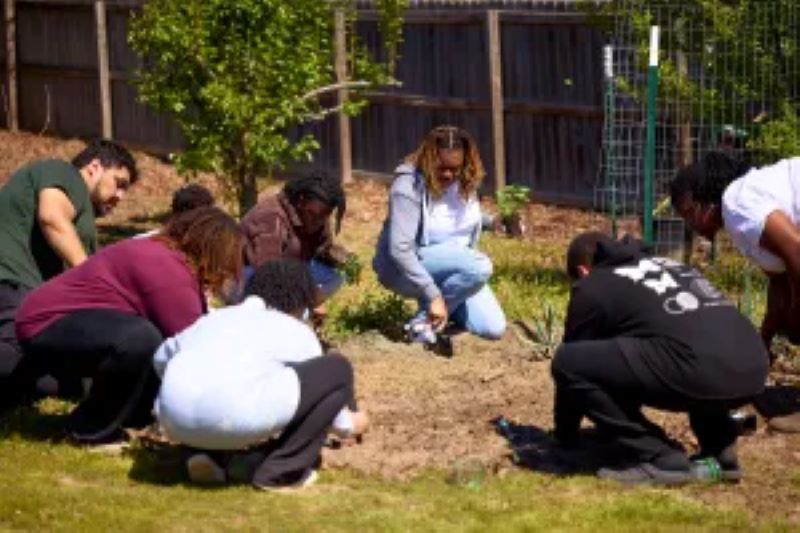
Drawing on her family’s experiences, Rucker now hosts workshops designed specifically for neurodivergent children and their families.
“Gardening gives neurodivergent children a lot of sensory input they benefit from,” she said. “Our oldest triplet, Deuce, loves taking off his shoes and walking in the soil – it’s fun and soothing for him.”
Rucker sets up pollinator gardens and sensory gardens for her neurodiverse garden classes.
“We are planting things they can smell, touch and observe up close,” she said. “Teaching a special needs child – or any child for that matter – how to identify sage or rosemary is going to be much easier if they can have this hands-on experience and be part of the process.”
Rucker said hands-on gardening can also help children become more comfortable trying new foods because they have participated in every step of the growing process.
One of Rucker’s favorite memories was when her middle triplet, Trey, had a breakthrough moment on the farm.
“Trey not only has autism, but also has hydrocephalus – essentially, a condition that causes fluid to build up on the brain,” she said. “He has always been a picky eater and for the longest time stuck to pizza, macaroni and cheeseburgers. He also has a hard time expressing his emotions.”
One day, when Rucker took Trey outside to harvest the garden, he pointed to a cucumber and asked what it was.
“I knew Trey already knew what a cucumber was – it was obvious to me he was just wanting to have a conversation,” she said. “So I replied, ‘I think that’s a tomato.’ He corrected me, and then, without skipping a beat, took a bite of the cucumber before we could rinse it off.”
After that moment with his mother, Trey continues to eat vegetables to this day.
“This moment made me feel accomplished as a mother of special needs children,” she said. “While this goal would have been so small to somebody else, it meant the world to us. It reminded me that no matter what, you have to keep going and teaching – even when it feels like things are going slow, you’re making an impact.”
Growing Food, Building Community
When it comes to her goals for the future, Rucker said she lives by the motto, “Grow food, build community.” It was inspired by the fact that visitors to her farm often travel long distances to come buy her produce or eggs or attend workshops.
“It may be unrealistic, but I want everyone I know to learn how to grow at least one to two things,” she said. “Because with Arkansas being number one in food insecurity, I feel like if we’re all growing something, systems like bartering could make sure that nobody actually goes hungry. You may not have exactly what you want to eat, but you’ll know how to take food security in your own hands and be able to grow something or call up your neighbor, friend or family member – simply put, to call on your community.”
For more information on Rucker Farm, visit www.ruckerfarmco.com. To get involved with the UAPB Small Farm Program, contact Karen Lee at [email protected].