
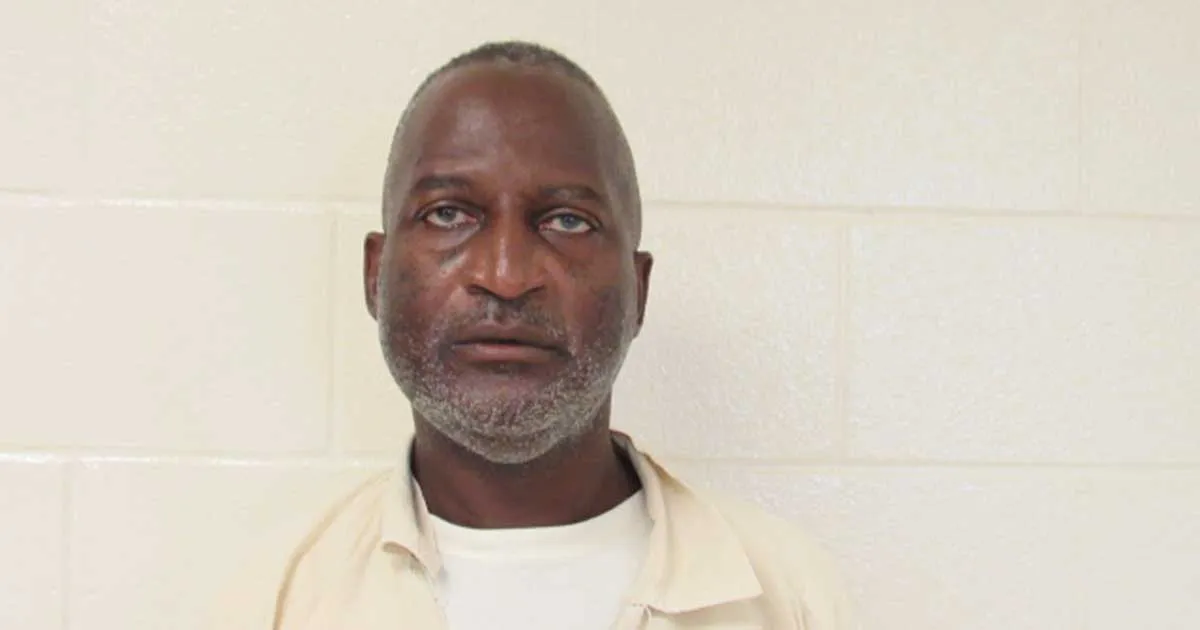
An innocent man was released from Tucker Prison on Friday, January 9th, after spending 35 years behind bars. Charlie Vaughn was accused of murdering 81-year-old Myrtle Holmes of Fordyce in 1988. Despite the fact DNA evidence did not match Vaughn and he had claimed innocence, Vaughn was incarcerated for pending trial in connection with the burglary, rape, and murder of Holmes. He was convicted in 1992.
Vaughn was known to be intellectually disabled and to suffer from mental illness. His initial plea was not guilty by reason of mental disease or defect. While a mental status exam was ordered, it was not conducted until 25 years later when it was found that Vaughn was very low functioning, unable to do simple math, make change for a dollar, or interpret basic sayings.
In addition to not matching the DNA at the crime scene, Vaughn was also unable to provide any factual details about the crime. Still, he pled guilty to avoid the death penalty and implicated three other individuals, who were also convicted.
There is evidence Vaughn’s plea was coerced and an informant who was offered a deal by prosecutors was deliberately placed in the cell with Vaughn to provide testimony against him. The attorney who represented him in the 1990’s admits he did not yet have the necessary experience to handle the case against Vaughn and as a result, he made mistakes. Due to policies at the time, lack of experience was not a valid reason for an attorney to withdraw from a court-appointed case.
In 2015, Reginald Early, who was one of the three individuals convicted with Vaughn, confessed to being the sole perpetrator of the crime against Myrtle Holmes. He had targeted her because she previously called police on him. DNA evidence confirmed he was involved as did his knowledge of the crime. Based on the DNA evidence and Early’s confession, the Midwest Innocence project and the Center for Wrongful Convictions at Northwestern University were able to overturn the convictions of the other two people convicted with Vaughn and Early. Vaughn remained in prison.
Following his co-defendant’s release, Vaughn’s counsel with the Innocence Project attempted to file a petition with Arkansas courts and then with the U.S. Court of Appeals for the Eighth Circuit. Both were denied. From there, a petition for clemency with then-Arkansas governor Asa Hutchinson was filed. The clemency request was also denied.
Two years later, counsel refiled the petition for clemency with Governor Sarah Huckabee Sanders. Despite initially positive feedback, this petition was also denied. By this time, Vaughn had been in prison for over 30 years for a crime that all evidence and reason showed he had not committed. Even the victim’s family does not believe he is guilty.
In December, a plea deal was finally reached for Vaughn to enter an Alford plea. An Alford plea states the defendant maintains their innocence but admits the state has enough evidence to convict them. After this, Charlie Vaughn was released from prison after 35 years behind bars for a crime of which he is innocent.
He is currently living with a family friend on a farm. He has been offered free room and board and a chance at a paying job while he figures out what to do next.


