
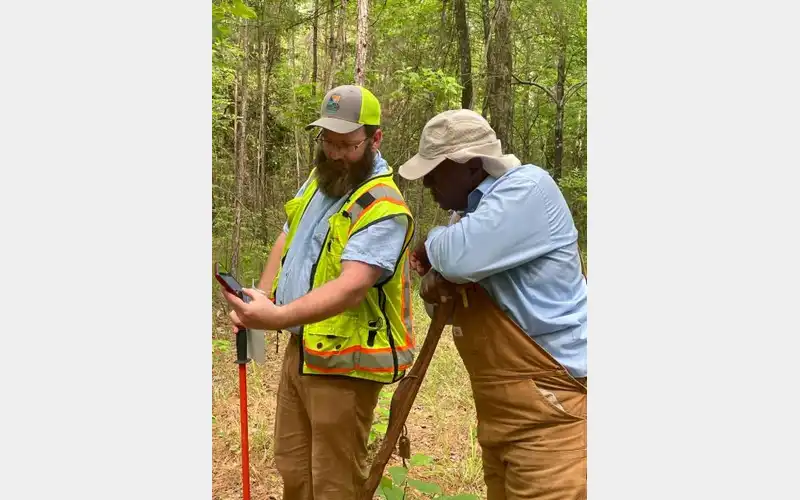
For many Arkansas families, inheriting or purchasing forestland represents an opportunity to create a lasting legacy. Whether the goal is generating income, improving wildlife habitat or simply enjoying the outdoors, University of Arkansas at Pine Bluff (UAPB) forestry experts say successful forest management begins with careful planning.
Justin Mallett, a forestry consultant with UAPB’s Keeping it in the Family Sustainable Forestry and Land Retention Program, said new landowners should first evaluate their property and determine what they want their forest to accomplish.
“Knowing your goals from the beginning is important,” Mallett said. “Some landowners want to generate income while others are more interested in recreation, wildlife habitat or preserving their property for future generations. Those goals help guide every management decision that follows.”
One common misconception is that the healthiest forests are simply left alone, he said. While trees naturally grow over time, today’s forests face challenges ranging from invasive species to insects, disease and competition among trees.
“Many people think harvesting is always harmful, but even practices like clear-cutting can serve an important purpose when done correctly,” Mallett said. “Natural disturbances such as wildfires and severe storms have always shaped forests. Sometimes thoughtful management is the disturbance a forest needs to remain healthy.”
Recognizing the signs of a healthy forest can help landowners address problems before they become severe.
According to Mallett, healthy forests experience only limited natural tree mortality.
When more than 15% of trees begin dying or trees start losing upper branches or leaves outside of drought conditions or seasonal changes, the stand may be experiencing stress from overcrowding, insects or disease.
Maintaining the proper number of trees, regularly walking the property and reducing wildfire risk through practices such as installing firebreaks are among the most important long-term management strategies, he said.
“Landowners should inspect their property regularly,” Mallett said. “Once a year is ideal, but at least every five years. Waiting too long can allow problems to become much more serious and expensive.”
Good forest management also benefits wildlife and the environment. By reducing overcrowding, trees experience less stress while sunlight reaches the forest floor, encouraging grasses and other vegetation to grow.
These plants provide food and cover for wildlife such as deer and turkey while also slowing runoff and reducing soil erosion, helping protect water quality.
Prescribed burning can provide additional benefits by reducing fuel that could intensify future wildfires while encouraging healthy understory growth.
Although timber can provide financial returns, Mallett said forestry should be viewed as a long-term investment rather than a quick source of income.
“If you manage your stand to produce high-quality trees, you’ll have a better product when it’s time to sell,” he said. “Good management helps maximize the value of the timber and makes the timber standmore attractive to buyers.”
He also cautioned landowners against “high-grading,” the practice of harvesting only the most valuable trees while leaving behind lower-quality trees. Over time, this can reduce both the health and value of a forest.
Small tract size remains one of the biggest challenges facing many Arkansas forest owners. Because harvesting equipment is expensive to move and operate, logging crews often focus on larger properties.
Mallett encourages owners of smaller tracts to work together with neighboring landowners whenever possible.
“If several nearby landowners market their timber together, it can make harvesting much more practical,” he said. “Networking with your neighbors and attending forestry meetings or conferences can open doors to opportunities you might not find on your own.”
Above all, Mallett recommends that landowners seek advice from qualified forestry professionals before making major decisions.
“Use a registered forester or another knowledgeable professional,” he said. “There are free resources available through the Natural Resources Conservation Service, the Arkansas Department of Agriculture’s Forestry Division and the UAPB Keeping it in the Family program. Asking questions before making decisions can help landowners avoid costly mistakes and protect their forests for generations to come.”
The UAPB Keeping it in the Family Sustainable Forestry and Land Retention Program provides educational resources and technical assistance to help family forest owners make informed decisions, improve forest health and preserve their land for future generations. For more information, contact Kandi Williams at [email protected].