
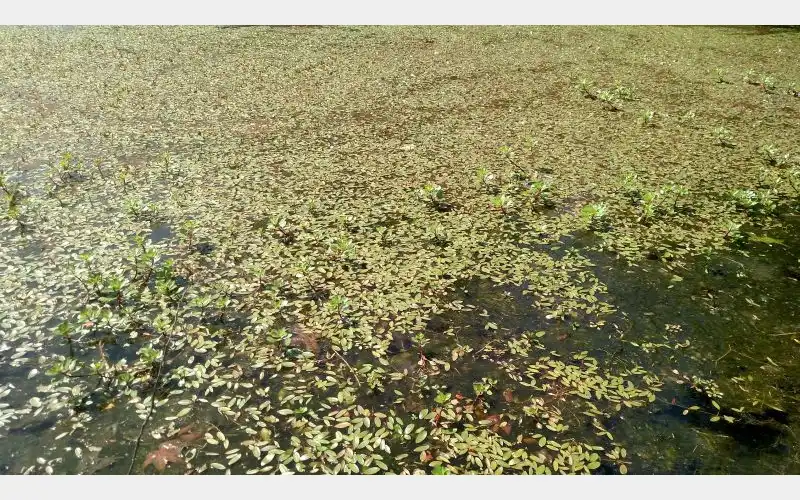
Nuisance aquatic weed growth is one of the most common problems faced by pond owners. While plants can provide utility to a pond, many species can grow so abundant that they cause more trouble than benefit, Scott Jones, small impoundment Extension specialist at the University of Arkansas at Pine Bluff, said.
“Many pond owners focus solely on strategies to kill the nuisance weed. What they fail to consider is what caused the weed to establish and grow out of control,” Jones said. “This approach of treating symptoms rather than the cause is what often leads to temporary results and eventual frustration as the weeds grow back as thick as before.”
In many cases, aquatic weeds are the symptom of another problem. The most common causes of weed growth are shallow water, clear water or excessive nutrients, he said. It is not uncommon for a combination of these problems to exist, requiring both to be dealt with before long-term control can be achieved.
Plants tend to be found in highest abundance within the “littoral zones” of ponds. These are the near-shore and shallow areas where sunlight intensity is sufficient to support plant growth on the bottom. While the littoral zone cannot be practically eliminated, it can be minimized during the pond design phase.
“Building pond banks with slopes of around 3:1 balances shoreline stability with weed prevention,” Jones said. “While the question of ‘what is deep enough’ to prevent weeds also
depends on water clarity, generally, minimizing water shallower than 3 to 4 feet is a good rule of thumb.”
Ponds usually become shallower as they age from sedimentation, erosion and accumulation of organic matter. Coves, pockets and drains into the pond tend to fill in first, followed by weed growth that may begin only as a small spot in the shallowest corner that slowly spreads each year away from the bank and farther out into the pond.
“Once this begins, the only real solutions are dredging, excavation or full renovation to remove the accumulated sediment and restore the original shoreline slopes and depths,” he said. “Treating weed beds with herbicides in this situation will only leave a shallow mucky area that will eventually be reoccupied by the same or another species of plant.”
Land practices uphill and around the pond that discourage erosion and limit nutrient runoff can help extend the life of the pond and limit weed development. Diffused aeration systems that maintain healthy oxygen levels at the pond bottom can also slow the aging of ponds and the development of some weeds by helping natural aerobic microbes more efficiently process organic matter and nutrients.
Plants will eventually grow in clear water during the warm season. The clearer the water, the deeper the plants can grow, Jones said. Ideally, ponds develop planktonic algae blooms that turn the water a translucent green. These blooms establish the base of the pond food chain which leads to better fish production, and it absorbs light which limits the growth of other plants in deeper water.
“If this condition does not develop naturally, it could indicate that the water chemistry or fertility is not sufficient to support the bloom and liming and/or fertilization may be needed,” he said. “Submitting a water sample for analysis to the Arkansas Water Resources Center for their Fish Pond Package would identify what, if anything, needs to be done to make the pond produce plankton.”
Aquatic dyes also reduce light transmission through water, reducing the depth at which plants can grow. Dyes will not reduce growth of plants in water shallower than 3 feet, or plants in deeper water that have already grown to within a few feet of the water’s surface.
“Apply dyes over winter or early spring before plants begin to grow and reapply as needed to maintain the dye through the growing season,” Jones said. “Dye will suppress planktonic algae blooms and can reduce fish production potential.”
For pond owners focused on growing more or larger fish, dye should only be used temporarily while existing aquatic weed issues are dealt with, he said. Once the weeds are controlled, work to establish and maintain a healthy plankton bloom.
“The most obvious indicator of excess nutrients is the presence of overly abundant weeds or dense plankton blooms reducing water visibility to only inches. Without these signs, assumptions can be made based on nearby land use but collecting and submitting water samples for analysis is the best way to know for sure whether a pond is overloaded with nutrients,” Jones said. “Ponds that are regularly accessed by livestock, are located directly downhill from poultry operations, or receive runoff from heavily fertilized turf or crop areas often have excessive nutrient loads.”
If the pond is old and has accumulated several inches of organic muck on the bottom from leaves and dead plants, the fastest way to remove a great deal of nutrients is draining the pond and removing the muck with machinery, he said. This organic muck, especially in acidic anaerobic conditions, retains nutrients that are released in pulses during seasonal changes and major disturbances to the pond bottom. Left untreated, thick muck layers fuel filamentous algae and other nuisance weeds while continuously retaining more nutrients.
The next best nutrient management option is diffused aeration; injecting dissolved oxygen to the pond bottom to help natural aerobic bacteria break down the muck. This takes significantly longer to work, and the water can turn murky and release odors for some time while the muck is being processed.
“There are several commercial products claiming muck or sludge removal. These are usually based on varieties of beneficial bacteria that quickly consume organic matter. These products increase the rate of organic muck breakdown and improvement can be observed within several days,” Jones said. “Most of the bacteria in these products are aerobic, meaning that they require dissolved oxygen to survive and work. This limits their maximum utility to shallow oxygenated water for most ponds. However, combining beneficial bacteria with diffused aeration can provide more significant improvements faster than one can achieve with either approach on their own.”
Plants that draw their nutrients straight from the water, such as planktonic algae, filamentous algae, floating plants and most fully submerged plants, can be reduced by removing dissolved nutrients from the water column, he said. Nutrient binders, sequestrants and flocculants
can reduce water nutrient loads by binding directly with phosphorous or by forming floc with organic matter and suspended solids that draw both phosphorous and nitrogen out of suspension.
“These products can work independently, or they can be used following herbicide treatments with the intent of capturing nutrients released during the decomposition of herbicide-killed weeds so that they cannot be used for subsequent plant regrowth,” Jones said.
Identifying plant species growing in the pond is another important step in the process of control. In some cases, resolving the fundamental problem that led to the weeds will also eliminate the weeds. In other cases, weeds may need to be treated before the problem can be fully resolved, or lingering weeds may need to be cleaned out to achieve full control.
“There are many online resources that can help identify pond weeds. Texas A&M’s ‘AquaPlant’ website (https://aquaplant.tamu.edu/) contains a database of plant photos you can scroll through. Clicking the photo that most resembles your plant takes you to pages with identification details and treatment recommendations,” he said. “The University of Florida Center for Aquatic and Invasive Plants operates a ‘Plant Directory’ website (https://plant-directory.ifas.ufl.edu/plant-directory/) that functions very similarly to AquaPlant.
A local publication, MP556, “Aquatic Vegetation Control in Arkansas” (https://www.uaex.uada.edu/publications/pdf/MP556.pdf) covers identification and management of the most common aquatic weeds in Arkansas, Jones said.
There are numerous publications, online and in-person resources for determining what water characteristics to manipulate, herbicides to apply, fish to stock or contractors to hire once the core problem is determined and what weeds have established, he said. Plant identification
resources usually provide lists of herbicide active ingredients and fish that are effective against each species of plant.
Narrow the herbicide and fish selection to those that are rated excellent (E) against the plants growing in your pond, then read the “Application Notes” and “Use Restrictions for Aquatic Herbicides” pages in the aquatics section of the MP44, “Recommended Chemicals for Weed and Brush Control” (https://www.uaex.uada.edu/publications/mp-44.aspx) to select the chemical most appropriate for your unique situation, he said.
“Killing weeds is relatively simple. Solving the problem that led to the weeds is not,” Jones said. “However, those who take the time to identify the fundamental problem and make effort to resolve that problem are more likely to enjoy more complete and lasting control over nuisance weeds than those who only address the symptoms.”
For more information about the cause and treatment of weed growth in fish ponds, contact Jones at (870) 575-8185 or [email protected].