
Research by a University of Arkansas at Pine Bluff (UAPB) faculty member is contributing to national conversations on leadership development by examining how family support shapes the leadership journeys of minority women.
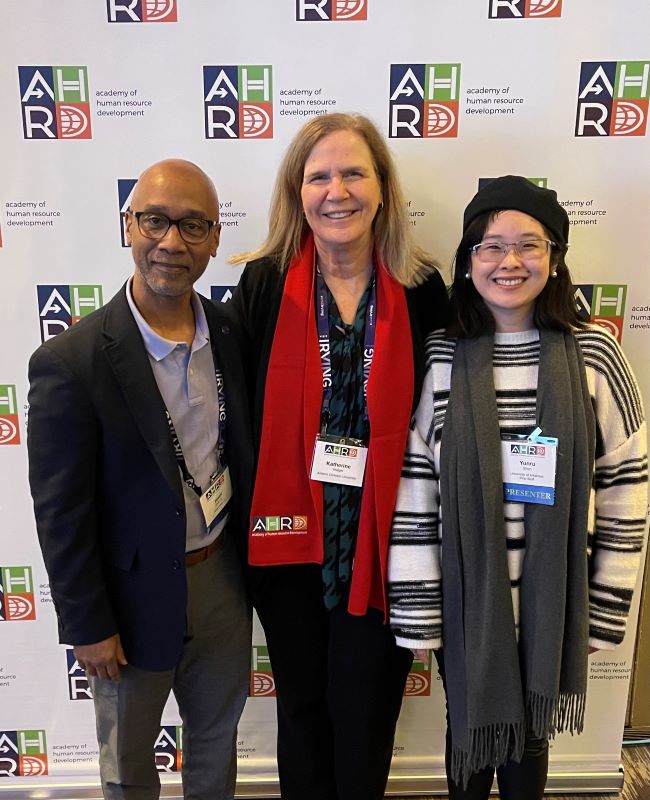
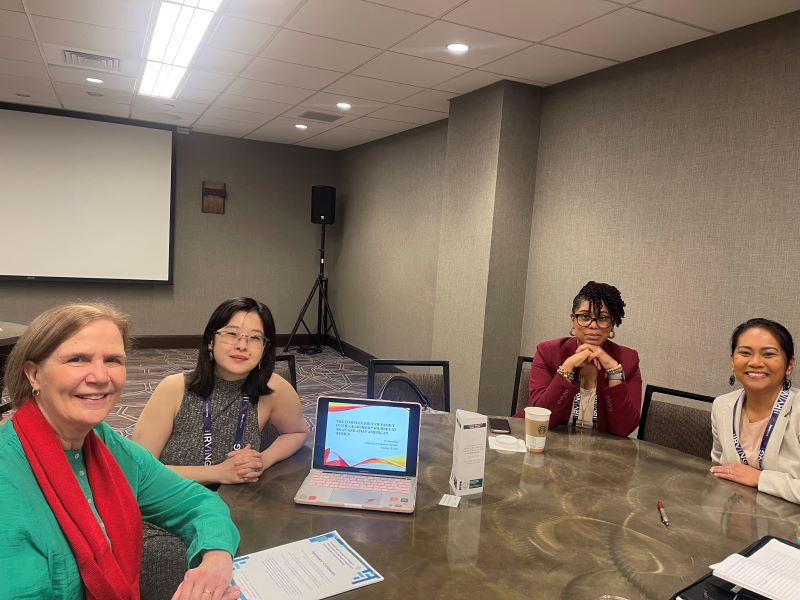
Dr. Yunru Shen, instructor in the Merchandising, Textiles and Design Program within the Department of Human Sciences, recently presented her research at the 2026 Academy of Human Resource Development International Research Conference in Irving, Texas. Her study explores how family relationships and cultural expectations influence leadership development among Asian and Asian American women in higher education.
While traditional narratives often suggest that cultural expectations may limit women’s leadership opportunities, Dr. Shen’s research reveals a more complex reality. Many participants in her study described family members as key sources of encouragement, emotional support and practical assistance while pursuing advanced education and leadership roles.
“Organizations can better support and retain diverse leadership talent by recognizing the broader social and family contexts that shape leadership development,” Dr. Shen said. “Leadership development does not happen in isolation.”
Dr. Shen said her findings come at a time when Asian and Asian American women remain significantly underrepresented in leadership positions in higher education, accounting for less than 1% of leadership roles. She added that the implications of her research extend beyond a single group.
“Although this study focuses on Asian and Asian American women, its insights are also relevant to other underrepresented groups,” she said. “It provides a broader foundation for understanding and advancing leadership development across diverse cultural contexts.”
The research also offers practical guidance for universities and organizations seeking to build more inclusive leadership pipelines. Dr. Shen emphasized the need for institutions to move beyond one-size-fits-all approaches and instead develop leadership programs that reflect diverse cultural and community backgrounds.
“In a university context such as UAPB, this includes creating mentorship opportunities, family-friendly practices and supportive environments that recognize the strengths individuals bring from their families and communities,” she said.
Dr. Shen said the research directly informs her work with students at UAPB, particularly within the Department of Human Sciences, where programs prepare students for careers in areas such as family and consumer sciences, human development, nutrition and design.
“Many of our students come from diverse backgrounds and balance academic responsibilities with work and family commitments,” she said. “This research helps us better support students in developing confidence, leadership skills and the ability to navigate those responsibilities successfully.”
By integrating research into teaching and mentorship, the department aims to create an environment where students from all backgrounds can succeed and emerge as leaders in their fields.
Dr. Marilyn Bailey, interim chair of the Department of Human Sciences, said faculty research plays an important role in advancing the university’s mission.
“It is my goal to encourage faculty to be research-active professionals by fostering a culture that celebrates scholarly achievements and strengthens our impact locally, nationally and globally,” Dr. Bailey said.
Dr. Shen, who has more than 12 years of experience in higher education, holds a Doctor of Education in organizational leadership. Her research focuses on leadership development, diversity in higher education and cross-cultural identity.
Pursuant to 7 CFR Section 15.3, the University of Arkansas at Pine Bluff and the School of Agriculture, Fisheries and Human Sciences, 1890 Research and Extension Programs, offers all its Extension and Research programs and services (including employment) without regard to race, color, sex, national origin, religion, age, disability, marital or veteran status, genetic information, sexual preference, pregnancy, or any other legally protected status, and is an equal opportunity institution.