
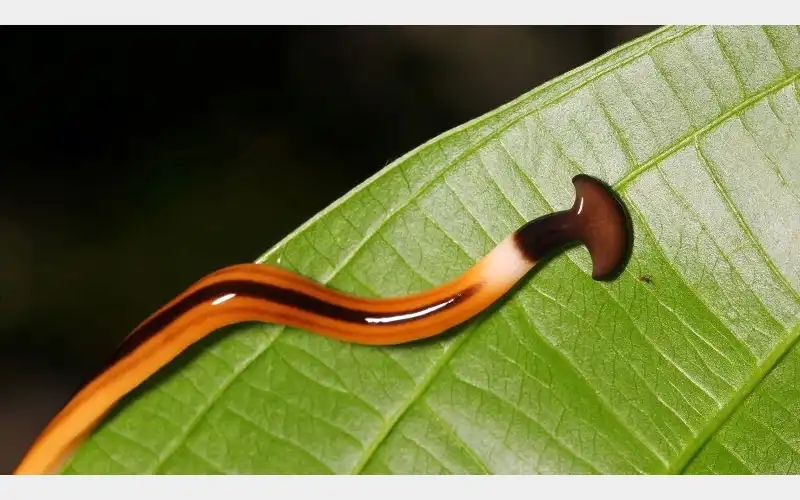
According to reporting by the Cleveland County Herald, hammerhead worms—an invasive species of terrestrial flatworm—have been confirmed in at least 10 Arkansas counties after being reported in the state for at least a decade.
Native to tropical and subtropical regions of Southeast Asia, the worms are believed to have spread through the movement of soil and horticultural products.
University of Arkansas System Division of Agriculture Extension Apiarist Jon Zawislak said they thrive in warm climates like those found across Arkansas and can also be transported in potted plants, truckloads of topsoil and construction equipment.
Hammerhead worms are identifiable by their broad, spade-shaped heads and flattened bodies, which often grow between 8 and 12 inches long. They are typically light in color with one to five dark stripes running along their backs.
The invasive worms feed on insect larvae, slugs, snails and earthworms. Because earthworms play an important role in maintaining healthy soil, experts say hammerhead worms have the potential to disrupt local ecosystems.
One of the species’ defining characteristics is its ability to regenerate.
If cut into pieces, each fragment can develop into a new worm, meaning attempts to kill them with a shovel or garden trowel may actually increase their numbers.
With this information, experts warn not to cut them.
Instead, the Division of Agriculture recommends wearing gloves when handling the worms and placing them in a sealed container or plastic bag with salt and vinegar or citrus oil before freezing them overnight and disposing of them.
Officials also note there is no need to report sightings to county extension offices, the state extension office or the Arkansas Department of Agriculture.
While experts say there is currently no practical way to eradicate hammerhead worms on a large scale, they encourage residents to destroy any they find using methods that prevent the worms from regenerating.