
As heat index values remain elevated across Jefferson County, health officials are reminding residents to take precautions to avoid overheating and recognize the warning signs of heat-related illnesses before they become life-threatening.
According to the Centers for Disease Control and Prevention (CDC), heat-related illnesses are largely preventable by staying cool, staying hydrated and recognizing symptoms early.
Older adults, infants and young children, people with chronic health conditions, outdoor workers and those without access to air conditioning are among those at the greatest risk.
The two most common serious heat-related illnesses are heat exhaustion and heatstroke.
Although they share some symptoms, heatstroke is far more dangerous and requires immediate emergency medical attention.
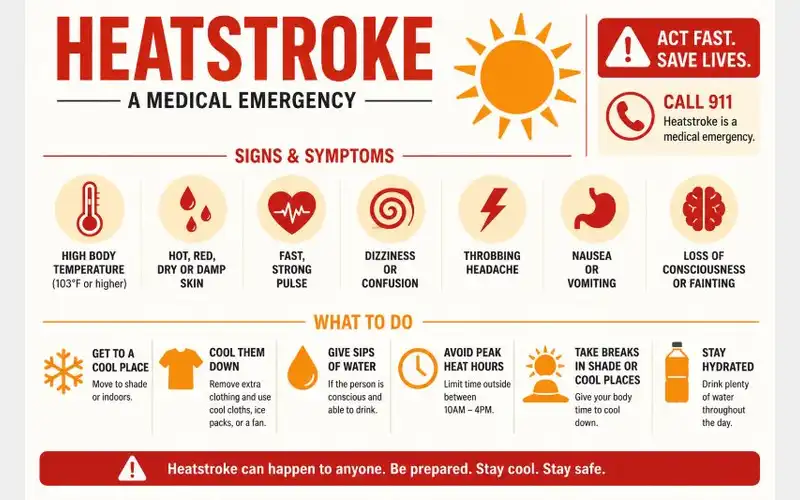
Heatstroke occurs when the body can no longer regulate its temperature, causing it to rise rapidly. The CDC says symptoms may include:
A body temperature of 103 degrees or higher
Hot, red skin that may be dry or damp
A fast, strong pulse
Headache
Dizziness
Nausea
Confusion or slurred speech
Loss of consciousness or seizures
Because heatstroke can cause permanent disability or death if not treated quickly, anyone suspected of experiencing heatstroke should be moved to a cooler location immediately, have excess clothing removed and be cooled with cold water, wet cloths or ice packs while someone calls 911.
Heat exhaustion is less severe but can progress to heatstroke if left untreated. Symptoms include:
Heavy sweating
Cool, pale or clammy skin
A fast, weak pulse
Headache
Dizziness
Nausea or vomiting
Muscle cramps
Weakness or fatigue
Fainting
Someone experiencing heat exhaustion should move to an air-conditioned or shaded area, loosen or remove unnecessary clothing, sip cool water and use cool compresses or a cool shower to lower their body temperature.
Medical attention should be sought if symptoms worsen, last longer than an hour or if the person cannot keep fluids down.
The CDC also recommends several steps to reduce the risk of overheating during periods of extreme heat.
Residents should drink water regularly without waiting until they feel thirsty, limit alcohol and excessive caffeine, wear lightweight, loose-fitting clothing, and schedule outdoor work or exercise during the cooler morning or evening hours whenever possible.
If air conditioning is unavailable, spending time in a public cooling center or another air-conditioned building can help lower the risk of heat-related illness.
Health officials also encourage checking on older neighbors, family members and anyone who lives alone during prolonged periods of extreme heat.
Children and pets should never be left inside parked vehicles, where temperatures can rise to dangerous levels within minutes.
More information about preventing heat-related illnesses is available on the CDC’s extreme heat and heat health webpages.