
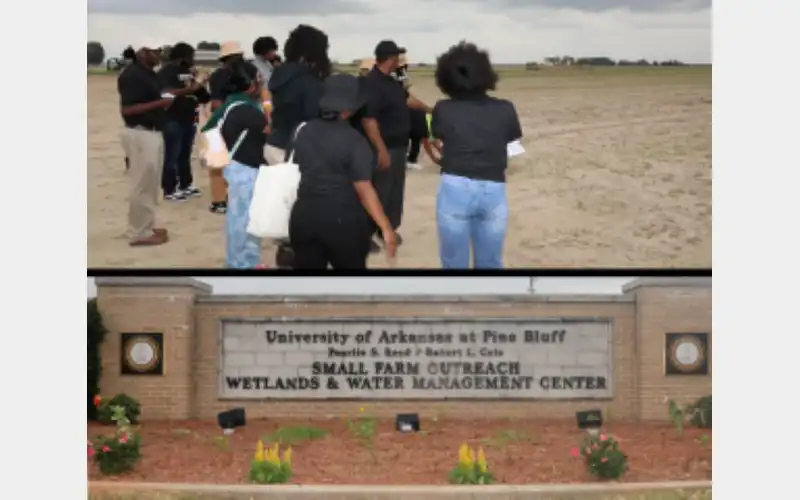
The University of Arkansas at Pine Bluff (UAPB) is making progress at the Pearlie S. Reed/Robert L. Cole Small Farm Outreach Wetlands and Water Management Center located at the UAPB Lonoke Farm, one year after signing a memorandum of understanding with partners focused on advancing conservation and agricultural innovation, Dr. Obadiah Njue, assistant dean for Extension and outreach, said.
The collaborative effort between UAPB, National Black Growers Council and Ducks Unlimited was established to improve drainage systems, recover agricultural runoff and identify new methods to conserve water at the Lonoke Farm.
Located approximately three miles north of Lonoke, Arkansas, the 889-acre farm serves as a teaching, research and demonstration site for students, faculty and producers throughout the state, Dr. Njue said. Since the agreement was signed, project partners have focused on assessing the farm’s existing infrastructure and identifying opportunities for modernization. Initial evaluations conducted by Ducks Unlimited staff and UAPB farm leadership have identified irrigation water supply, water management and equipment upgrades as critical priorities.
“Once implemented, these upgrades will help us improve our irrigation water use efficiency at the Lonoke farm,” he said.
The project aims to integrate modern agricultural technologies that support hands-on learning for students, faculty research and water conservation farming practices while also reducing long-term operational costs. Planned improvements include converting wells and relift pumps to electric, cleaning and regrading canals, expanding underground pipe systems, implementing precision land leveling and guidance systems for tractors and combines, constructing tailwater recovery ditches, repairing reservoir levees and installing telemetry systems and a weather station for real-time monitoring.
Julius Handcock, the Lonoke Farm manager, stated that the upgrades are designed to strengthen conservation efforts while creating new educational opportunities for students studying agriculture, water management and environmental sustainability.
“At present, there is no set timeline as we work to increase efficiency at the UAPB Lonoke Farm; improvements will continue as funding becomes available,” Jessica Whitaker, Ducks Unlimited representative, said. “I am very excited with the progress we have made so far, and I look forward to a longstanding and productive partnership with the university.”
The improvements are also expected to reduce groundwater withdrawal, lower operating costs and provide measurable environmental benefits for agricultural producers across Arkansas. According to Handcock, the farm will continue to serve as a demonstration site showcasing conservation technologies and water-efficient farming practices for current and future producers.
The original memorandum also outlined a commitment to assist producers through education and outreach related to wetlands management and emerging agricultural technologies, reinforcing UAPB’s mission of supporting small farms and rural communities throughout the region.