
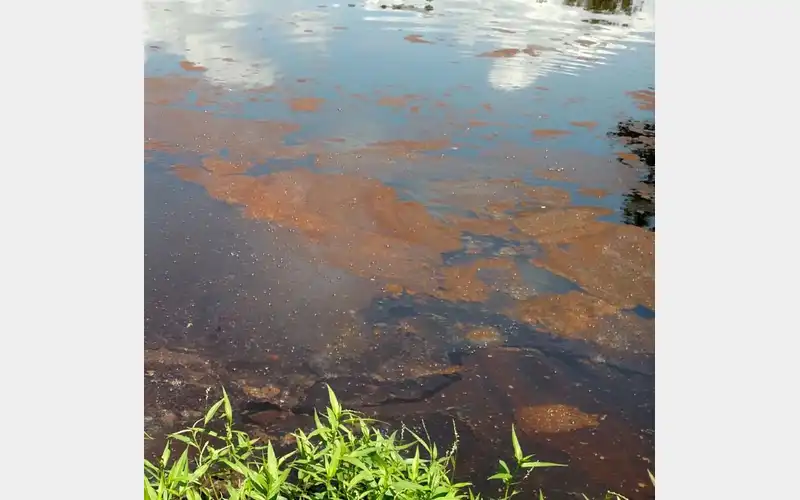
A peculiar situation occurring most frequently during late spring to summer can leave some pond owners confused, concerned and asking, “Why is the pond red?”
“Seeing red-colored water in a pond or lake is somewhat unusual and can be alarming,” Scott Jones, small impoundment Extension specialist at the University of Arkansas at Pine Bluff, said. “Rightfully so, as things that make water appear red are usually problematic or indicate signs of trouble.”
The most common causes of “red water” in Arkansas are blooms of a group of plankton called Euglena, blooms of cyanobacteria (blue-green algae), the floating plant known as Mosquito fern (Azolla) or water contaminated with tannins, iron or other pollutants, he said.
“Euglena are single-celled mobile protists that can photosynthesize like a plant and consume other microorganisms like an animal,” Jones said. “Some species of Euglena can produce a red pigment that protects their chloroplasts from excessively intense sunlight. This color change can happen in minutes.”
It is not uncommon for a pond with an active Euglena bloom to appear a relatively normal green in the morning, and an alarming bright red in the afternoon, he said. Some species of Euglena can produce toxins that harm fish. The presence of a Euglena bloom does not guarantee that toxins are being released and that fish are in danger, but there is potential for that to occur.
Cyanobacteria, also known as blue-green algae, can produce red colorations that are usually mixed in with other shades of green, blue and grey within a surface scum. As with Euglena, cyanobacteria can produce toxins harmful to fish and wildlife especially when the blooms become dense enough to form surface scums.
“Euglena and cyanobacteria blooms can be treated in similar ways, using common algaecides based on copper sulfate or sodium carbonate peroxyhydrate to kill the blooms directly,” Jones said. “Remember to use partial treatments and allow the pond to recover for at least one week between treatments during summer or dissolved oxygen problems can develop from excessive plant decomposition. Also, the blooms reach this problematic state from excessive nutrient loads. Using algaecides alone will provide only days of relief. Incorporating flocculants to remove nitrogen and phosphorous from the water is essential for lasting results.”
Another common red menace to Arkansas ponds is Mosquito fern, also known as Water fern or Azolla. This floating plant can create mats on the surface that from a distance resemble duckweed or watermeal, he said. Upon closer inspection, the Mosquito fern is larger than the other two plants, has a velvety texture to its leaves and during intense sunlight or stressful conditions can turn red.
“Mosquito fern can be treated directly with aquatic herbicides based on flumioxazin or fluridone,” Jones said. “For small ponds, removing Mosquito fern with nets or mesh bags may be viable, though strenuous work. Nutrient reduction will also help slow Mosquito fern growth, as will circulating or aerating the water.”
Other contaminants can give water a reddish appearance. Tannins leaching from fallen leaves, bark and sticks can stain water a transparent tea-colored brown, he said.
“The tannins themselves are not usually harmful to fish, but ponds with this staining often have other water quality issues that have helped allow this staining to occur and persist,” Jones said. “Reducing the amount of plant litter that enters or stays in the water and improving the pond’s organic processing capacity through aeration can help reduce tannin staining over time.”
Iron in water can create a rusty red to orange appearance. This is most common in ponds that are filled or supplemented with pumped groundwater containing high loads of iron. Iron is an essential micronutrient for fish health, he said. However, excessive concentrations can cause respiratory and reproductive issues.
“Iron is rarely excessive in typical fishing ponds, even those filled with well water, because iron quickly oxidizes and settles to the pond bottom near where it entered,” Jones said. “Designing structures or jagged paths for well water to splash and tumble through helps speed iron oxidation and remove potentially harmful dissolved gases before they can enter the pond. Iron usually only causes problems when other severe water quality problems exist.”
Contamination from polluted sites can also change the appearance of pond water. Acid mine contamination is an example, he said, though few major sites can be found in Arkansas.
“If you suspect that something harmful is draining into your pond that cannot be explained by the examples presented here, you can contact the Arkansas Department of Energy and Environment Division of Environmental Quality Office of Water Quality for guidance and assistance (https://ee.arkansas.gov/environment/office-of-water-quality/),” Jones said.
For more information about causes and solutions for red color of ponds, contact Jones at (870) 575-8185 or [email protected].